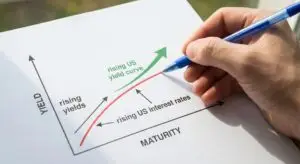
This week, the ADP employment report in November showed a decline of 32,000 positions, a sharp deviation from consensus expectations. The prevailing narrative has been that the labor market is resilient enough to withstand higher interest rates, but this print suggests the cracks are forming faster than anticipated. With the Fed’s dual mandate of price stability and maximum employment now back in focus, the calculation changes. A contraction like this forces the central bank to pivot from fighting inflation to preventing a recession, which likely means rate cuts are back on the table regardless of where inflation sits.
The Productivity Paradox
There is also a wave of AI innovation that will create new opportunities, but the increase in productivity is coming at the cost of people’s jobs, which we are now seeing show up in the data. We are witnessing a classic struggle between capital and labor. It is more than likely that businesses are reporting strong results because they are becoming more productive and therefore more profitable. Companies are incentivized to replace expensive human overhead with efficient software, and human capital is losing value to chatbots.
This shift is not just about blue-collar automation anymore; it is coming for white-collar knowledge work. The workers that embrace the new technology will find jobs and could demand higher salaries because they will be the ones leveraging the AI to do the work of ten people. But for every one person who adapts, there may be several left behind. The question remains: what types of jobs will our children and grandchildren be working in? It is a conversation we need to have not just as investors, but as families planning for the next generation.
Intelligence vs. Wisdom
I tested out Gemini 3 this week and came away blown away with what it’s capable of doing. The speed at which it processes information and generates logical frameworks is unlike anything I have seen in my career. I’ll adapt to the new technology and am still figuring out how to use it to best support you, and for now, it has made me more productive. For example, the retirement planning presentations will be improved by allowing me to visualize data scenarios much faster.
However, there is a distinct difference between processing data and wisdom. The one thing AI can’t do well is invest. Algorithms chase momentum and look at historical patterns; they lack the intuition to understand human panic or euphoria. You can learn more about any business you follow, but relying on it for answers to investing is not the best approach because AI cannot gauge the nuance of a CEO’s tone on a conference call or the geopolitical implication of a sudden event. If anything, the AI programs that trade the market tend to overreact.
The “Fake News” Environment
There is also so much misinformation. We live in an era where speed is valued over accuracy, and this creates a dangerous environment for reactionary investors. I thought the most material news this week was on Wednesday when a report hit that Microsoft cut AI software sales quotas, apparently because demand was weaker than expected. The stock immediately fell around $12 or 3%. In the past, a move like that required a confirmed press release. Now, algorithms read headlines and sell instantly before a human even reads the first sentence.
I texted a friend that it had to be fake news and someone must have made a lot of money planting that story. In a market structure dominated by machines, liquidity is thin, and a single planted rumor can wipe out billions in market cap in seconds. There was no real source and therefore it was AI generated. Microsoft eventually came out and said the report was inaccurate. The way to approach this is that all news is fake unless it comes from the company itself.
Also, we have learned almost all the government data releases are not accurate and are revised drastically up or down. We see this every month with the Bureau of Labor Statistics. They release a number, the market moves, and then a month later they quietly revise it to show a completely different reality. Yet the market still reacts to fake news on Microsoft or Apple or any government release. It is a game of psychology, not fundamentals. As investors, the only thing you can do is don’t pay any attention to it. If the economy is slowing or growing, you will hear it from the major bank CEOs who watch credit card purchases and whether people are paying their bills. I trust the commentary from leaders at JPMorgan or Bank of America far more than a government survey.
The Gatekeeper Role
Sometimes my role as your wealth advisor has nothing to do with listening to business leaders or managing retirement portfolios. There is another side of the job that is just as important which is acting as a gatekeeper to protect your financial assets. On Thursday I had a 91 year old client call asking for a $25,000 withdrawal for a man she had just met who claimed he needed money to start a business. We spend so much time discussing complex digital fraud originating from overseas servers that it is easy to forget the old dangers. This was not a phone scam. The threat was physical. He was sitting in her house trying to get a loan from her.
I immediately said I had to go because I didn’t want to give an answer. My instinct was to create a delay. It’s her money so I should follow her instructions, but I said I don’t have access to a computer so let’s talk in the afternoon. This bought us time. I called back later when the man left and asked if I could speak to another family member. She gave me the name of her nephew and I asked for permission to speak with him. I let him know the situation and he got involved so when the man came back in the afternoon, the answer was no loan would be given out.
Lucky for her she didn’t have the money sitting in a bank account like so many elderly people do, because she would have written a check and nobody would have known. I recently read a statistic that one in five seniors report being victims of financial fraud or abuse. The real number is probably higher because many seniors never realize they were targeted or taken advantage of. That is exactly what would have happened in this case. By keeping her assets in the Schwab investment account, we created a necessary friction point. I know many of you have elderly parents so the lesson is to put safeguards around their money. My client was just feeling like she wanted to help someone because she has such a kind heart. That kindness is exactly what predators target. Most of her money will eventually be donated to the church, which tells you everything about the type of person she is. But years ago she would never have given anyone a loan, and that is precisely why she made the decision to hire me as she got older to watch over her accounts and protect her from situations like this.
A Warning on Security
Some people care less and less about money as they age and for good reason. This is just a lesson to be sure your parents advisor or you are looking out for them. This guy was in her living room! That is a terrifying escalation. Most of the fraud is from 3rd world countries and those crimes are getting more sophisticated due to AI. It is not just typos in an email anymore. You can’t tell what is real or fake. Even the voices can be fake. We are approaching a time where a scammer could call your parent using a clone of your voice asking for help. AI will do great good, but with no current regulations around it yet, it feels like the speed of innovation is happening too fast. At some point, it will be good to slow down and figure out what its impacts will be and how to protect people from the dangers of it.
Cambridge Savings Bank must have been thinking the same thing this morning. I received an email from them with the subject line “Extremely Important… please read this.” It was the first email I have ever received from them and the message could not have been clearer. I would like to remind you to stay vigilant as fraud attempts continue to rise across ALL banks in the US.
They emphasized that Cambridge Savings Bank will never call you to ask for personal or account information. If you receive a call from someone claiming to be from CSB, hang up IMMEDIATELY and call us back using the official phone number listed on our website or on the back of your debit card. Do not return the call using the number that contacted you. Additionally, for your safety, please avoid placing outgoing mail in the blue USPS collection boxes overnight, as these have increasingly become targets for mail theft and fraud. They steal your checks, call you to “verify” the info on the stolen check they have in their hands, and you think it is the bank. It is NOT.
I am confident all of you know these basics, but what many people do not fully appreciate is how advanced AI has become in only a few years. You will not be able to tell the difference between fake or real. Someone with no education and no language skills can now impersonate you, sound polished, build a website, or generate an email that looks indistinguishable from a legitimate institution. What once took a team of programmers months to create can now be built in minutes. This is why not just clients but institutions themselves will have to strengthen their defenses. And it is why you have me watching alongside you as a safeguard. I am notified instantly of all activity on your account.
The area where I have seen the greatest improvement is in wire protection because it is the only way for money to leave your account. Schwab calls me for every wire request and walks through security questions, and then I will call you back at your number and ask you to verify the request, even if I already know you initiated it. Schwab’s internal team also reviews every wire in detail. The safeguards have become so strong that I almost prefer not to send wires at all. Just a few weeks ago, even after completing all the security steps, I decided it was safer not to send the wire directly. Instead, we moved the money to the client’s bank, and their bank sent the wire. I simply no longer feel comfortable sending third party wires, and if I can avoid them, I will.
From an investment standpoint, this is also a reminder of why we keep our approach grounded. The world is moving fast, sometimes uncomfortably fast, but my job is to stay steady through it and look for the opportunities it creates. Markets will continue to react to rumors, revisions, and noise. Technology will reshape industries and challenge long held assumptions. But the core principles do not change. Stay confident. Let opportunities come to you. Invest with purpose and a long view. Keep your focus on the progress being made and tune out the noise.
Have a great weekend!
Sources
1. ADP Research Institute. (2025). ADP National Employment Report. (November data showing -32,000 positions).
2. Google. (2025). Gemini 3 Release Notes & Capabilities.
3. Microsoft Corp & Financial Media. (2025). Reports regarding AI software sales quotas and corrections.
4. Bureau of Labor Statistics. (2025). Monthly Employment Situation Summary & Revisions.
5. National Council on Aging / AARP. (2025). Financial Fraud Among Seniors Statistics.
6. Cambridge Savings Bank. (2025). Client Fraud Alert Communication.
7. Charles Schwab & Co. (2025). Wire Transfer Security Protocols.
Disclaimer
The information provided in this communication is for informational purposes only and does not constitute financial, investment, or legal advice. All content is based on data and sources believed to be reliable, but accuracy and completeness cannot be guaranteed. Market conditions and economic factors are subject to rapid change. Past performance is not indicative of future results. The views expressed herein are those of the author and do not necessarily reflect the official policy or position of any other agency, organization, employer, or company. Investors should conduct their own research and consult with a qualified financial advisor before making any investment decisions. The author may hold positions in securities mentioned in this post.